 查字典图书网
查字典图书网
查字典图书网
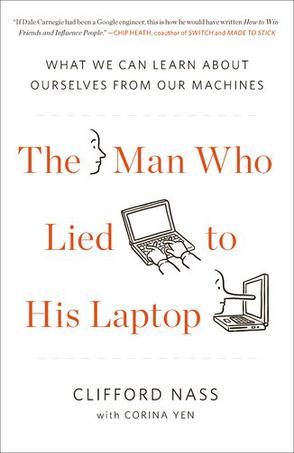
内容简介:
Counterintuitive insights about building successful relationships-based on research into human-computer interaction.
The driver was insistent: "A woman should not be giving directions." Despite the customer service rep's reassurance that the navigation system in his car wasn't actually a woman-just a computer with a female voice-the driver (and many others like him) refused to listen. There was only one person for BMW to call for help: Clifford Nass, one of the world's leading experts on how people interact with technology.
After two decades of studying problems like BMW's GPS system, Microsoft's Clippy (the most reviled animated character of all time), and online evaluations that lead people to lie to their laptops, Nass has developed a powerful theory: Our brains can't fundamentally distinguish between interacting with people and interacting with devices. We will "protect" a computer's feelings, feel flattered by a brown-nosing piece of software, and even do favors for technology that has been "nice" to us. "All without even realizing it."
In his research at Stanford, Nass has leveraged our fundamentally social relationship with computers to develop and test a series of essential rules for effective human relationships. He has found that the most powerful strategies for working with people aren't really that complicated, and can be learned from watching what succeeds and fails in technology interfaces. In other words, if a computer can make friends, build teams, and calm powerful emotions, so can any of us.
Nass's studies reveal many surprising conclusions, such as:
? Mixing criticism into praise-a popular tactic for managers-is a destructive method of evaluation.
? Opposites don't attract-except when one gradually changes to become more like other.
? Flattery works-even when the recipient knows it's fake.
? Team-building exercises don't build teams-but the right T-shirt can
? Misery loves company-but only if the company is miserable, too.
Nass's discoveries push the boundaries of both psychology and technology and provide nothing less than a new blueprint for successful human relationships.
